I spent nine years in the insurance industry, sitting in the middle of the mess left behind when ‘everything went wrong.’ I’ve seen the reports, I’ve read the forensic summaries, and I’ve watched premiums skyrocket for people who thought they were ‘fine to drive’ because they had a prescription in their glovebox. Now, I write about the tech that’s changing our roads. And right now, there is no bigger change than the shift to Electric Vehicles (EVs).
EVs are marketed with buzzwords like "instant torque control" and "thrilling acceleration." But as an ex-claims handler, I don’t see thrills. I see a massive change in the physics of a collision. When you pair that instant power with a driver whose reaction time is compromised—whether by fatigue, alcohol, or even legal medication—you aren't just driving a car; you’re operating a loaded weapon. Here is what you need to know about the law, the physics, and the reality of your insurance policy.

The Physics: Instant Torque vs. Human Lag
If you’ve driven an internal combustion engine (ICE) car for years, your brain is hardwired for a certain sequence: pedal down, engine revs, gear changes, power builds, move forward. There is a built-in lag—a split-second ‘buffer’—that lets your brain catch up with the movement of the car.
EVs don’t do ‘lag.’ Because electric motors produce maximum torque from zero RPM, the acceleration is immediate. This is where instant torque control becomes a safety issue for anyone with slower reaction times. If you are distracted, medicated, or simply tired, that millisecond of hesitation you might get away with in a petrol hatchback will result in a shunt, a mount of a kerb, or a failure to brake in time in an EV.
Smooth acceleration is a skill you have to learn all over again in an EV. If you aren't mentally sharp, you’re likely to ‘punch’ the throttle unintentionally. In a high-torque EV, that mistake happens at the speed of electricity, not the speed of an engine spooling up.
The Roadside Reality: Section 5A and Drug-Driving
Let’s cut through the vague advice you read on forums. In the UK, we operate under Section 5A of the Road Traffic Act 1988. This is the ‘specified drug’ legislation. It isn't just about being ‘impaired’—it is about the presence of the substance in your blood exceeding the prescribed limit.
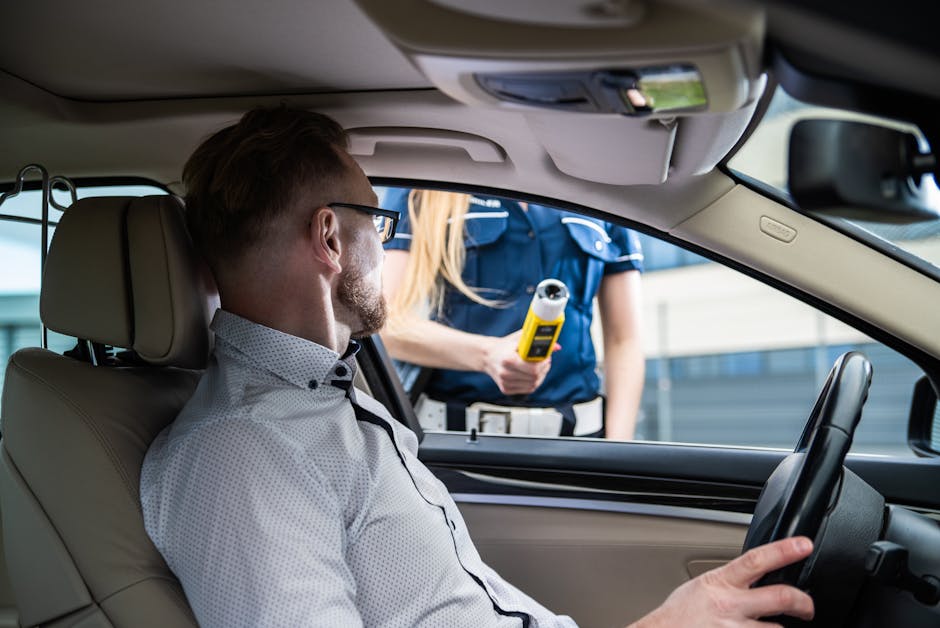
Here is what the police officer means when they pull you over: they don’t need to prove you were swerving all over the road. They only need a positive reading from a roadside test kit. If you are over the limit, you are, by law, guilty of drug-driving. End of story.
The THC Limit: Why It’s Set to ‘Near-Zero’
The limit for Delta-9-Tetrahydrocannabinol (THC) in the UK is 2 micrograms per litre of blood. Many people argue this is "too low" or "unfair." From an insurance and underwriting perspective, it’s actually quite logical. The limit was set to be as close to zero as possible while still allowing for trace amounts from second-hand smoke or extremely low-level exposure. It is a ‘zero-tolerance’ policy in all but name.
If you consume cannabis—medical or otherwise—that THC stays in your system long after the ‘high’ has worn off. When you get behind the wheel of an EV the morning after, that 2mcg limit is looming over you. If you get into a collision, the police *will* test you. If you’re over that limit, your insurance is likely voided for breaching the law, and you’re looking at a mandatory driving ban.
Medical Cannabis: The "Legal Defence" Myth
I hear this constantly: "But I have a prescription, so I’m legal." This is the most dangerous misunderstanding I encounter. Having a prescription for cannabis does not grant you a blanket immunity from prosecution for drug-driving.
In the UK, Section 5A(3) provides a ‘statutory medical defence.’ This means if you are caught over the limit, you can claim the drug was prescribed and taken in accordance with medical advice. However, there are massive caveats to this:
- The Burden of Proof: You have to prove you were not impaired. This involves complex blood tests and often a trial. It is expensive, stressful, and rarely a "get out of jail free" card. Fitness to Drive: Being prescribed a substance does not make it ‘safe’ to drive. If your medication states "may cause drowsiness" or "do not operate heavy machinery," and you drive anyway, you are inherently liable for any incident that occurs. Disclosure: If you have a medical condition that requires this medication, you are legally required to disclose it to the DVLA. If you haven't, your insurance policy is effectively a scrap of paper.
Comparison: The Roadside Perspective
Aspect The Myth The Roadside Reality "I have a prescription" I am exempt from the law. You are still subject to the same limit; you just have an extra legal hoop to jump through later. "I feel fine" I am safe to drive. "Impairment" is subjective; "Presence" (the limit) is objective and evidence-based. EV Power It’s just a faster car. It’s a high-torque machine that amplifies every mistake you make while reaction-impaired.The Checklist: Your Pre-Drive Protocol
As a former claims handler, I suggest you treat every time you get into your car as a potential incident. Before you put that EV into ‘Drive,’ run through this mental checklist. It’s what I used to look for when deciding whether to pay out on a claim or trigger a fraud investigation:
Documentation: Is my driving licence valid? Is my insurance up to date, and have I declared any medical conditions? (If you haven't told your insurer about your prescription, you are likely uninsured). Disclosure: Has the DVLA been notified of my medical condition? If you’ve been told ‘not to drive’ by a GP and you do it anyway, the insurance payout will be denied. Impairment Check: Are my reaction times affected? Have I taken medication that makes me drowsy? Can I physically handle the instant torque of this vehicle safely today? Insurance Standing: Does my policy have a ‘driving under the influence’ exclusion? (Hint: They all do. Driving over the legal drug limit is a breach of contract).Final Thoughts: Don't Blame the Tech
The instant torque of an EV is a beautiful thing. It makes modern driving effortless and efficient. But don’t confuse the car’s capability with your own. Driving is a privilege that relies on your cognitive ability to anticipate hazards. When you introduce substances that slow your reaction time—even if they are ‘legal’—you are choosing to handicap yourself in a vehicle that is designed to move faster than your brain can process.
If you are struggling with a prescription, don’t rely on the "I’m legal" defence. The law cares about what is in your blood, and insurance companies care about what you failed to disclose. Be honest with your doctor, be honest with the DVLA, and be drug driving blood limit THC UK honest with yourself about your reaction times. If you aren't 100%, the best move you can make is to leave the car in the driveway.